🏔 Historic Significance
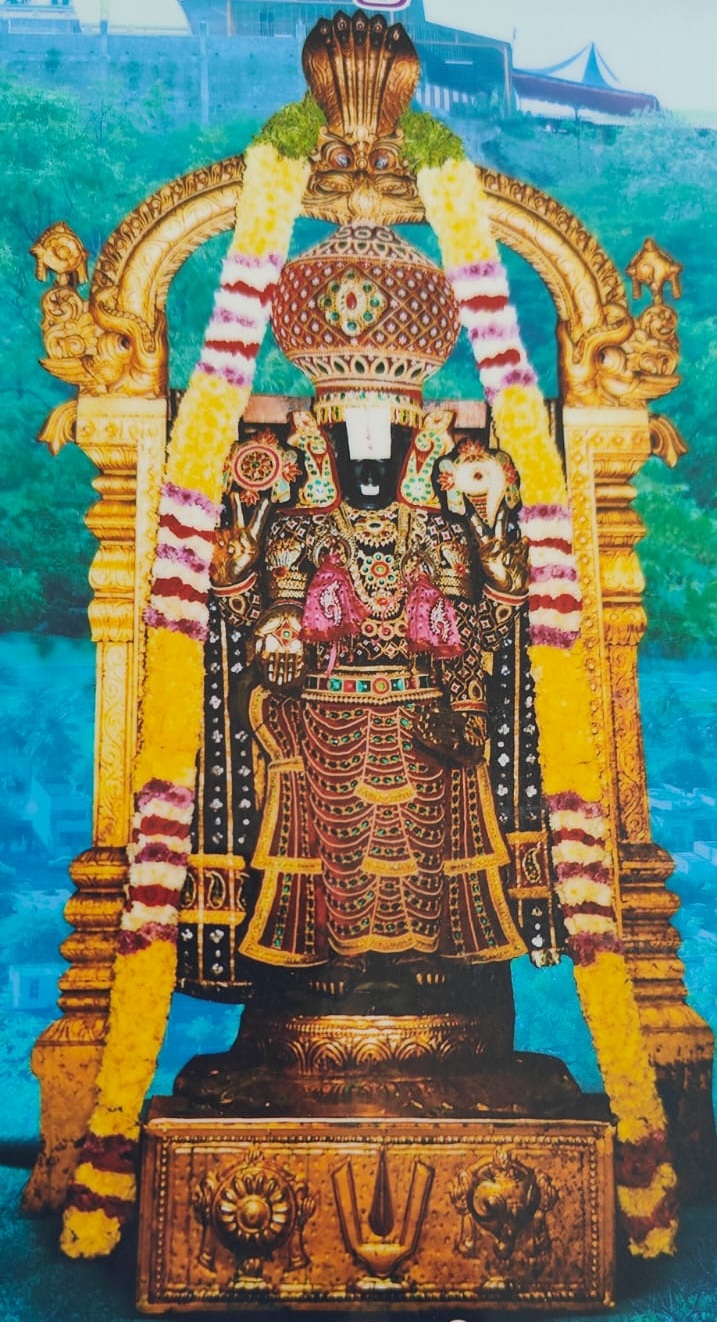
Thirumalai Vaiyavoor, located in Tondaimandalam, Chengalpattu district, Tamil Nadu, is a temple of immense historical and spiritual significance. This ancient kshetra was earlier known as Thirumaali Vaiyapuri, which over time evolved into Thirumalai Vaiyavoor. The temple is believed to have been constructed over 1,000 years ago, during the Pallava or early Chola period, highlighting its deep-rooted history. The name of the kshetra has a unique origin: the Tamil word “vaiya” refers to “not to place on the floor.” This is associated with Lord Hanuman’s act of carrying the Sanjeevini Parvatham while praying to Lord Venkatesa Perumal. Over centuries, the kshetra came to be called Thirumalai Vaiyavoor, reflecting both linguistic evolution and the legend connected to it.
🏛 Ancient Roots: The temple is located in Tondaimandalam, Chengalpattu district, Tamil Nadu.
⏳ Age: Estimated to be over 1,000 years old, built during the Pallava or early Chola period.
🏞 Location Evolution:
- Earlier known as Thirumaali Vaiyapuri.
- Later called Thirumalai Vaiyavur/Vaiyavoor.
- The name derives from the Tamil word “vaiya” – meaning “not to keep on the floor,” linked to Lord Hanuman carrying the Sanjeevini Parvatham.
🙏 Legend of Sri Veera Narthana Hanuman
The kshetra is closely linked to Sri Veera Narthana Hanuman, a powerful form of Hanuman celebrated for his courage and devotion. According to legend, during the war in Lanka, Lakshmana, brother of Lord Rama, was severely injured by Indrajit, son of Ravana, and fell unconscious. Hanuman immediately flew to the Himalayas to bring the Sanjeevini Parvatham to revive him. On his way, a small portion of the mountain fell near the banks of river Pallar, marking the origin of Hanuman’s presence in this kshetra. While traveling from Dronagiri to Lanka, Hanuman wished to offer prayers to Lord Venkatesa Perumal, but he could not place the Sanjeevini Parvatham on the ground. Seeing this, the Lord Himself shifted the hillock from one hand to the other, allowing Hanuman to pray. This act gave rise to the term “Vaiya”, meaning “not to place on the floor,” and hence the name Thirumalai Vaiyapuri, which later evolved to Vaiyavoor.
🙏 Hanuman’s Role:
- During the war in Lanka, Lakshmana was struck by Indrajit’s arrows and fell unconscious.
- Hanuman flew to bring Sanjeevini Parvatham to cure him.
🏔 Connection to the Kshetra:
- A small portion of the mountain fell near the banks of river Pallar.
- The Hanuman here is known as Sri Veera Narthana Hanuman.
🙏 Offering Prayer to Lord Venkatesa Perumal:
- Hanuman wanted to pray while carrying the mountain.
- Lord Venkatesa Perumal shifted the hillock from one hand to the other, allowing Hanuman to pray.
📝 Origin of the Name “Vaiyavoor”:
- Tamil “vai” = keep on the floor, “vaiya” = do not place on the floor.
- Hence, the name evolved from Thirumaali Vaiyapuri → Thirumalai Vaiyavoor.
📜 Stala Purana (Sacred History)
The Stala Purana of the temple begins with the Varaha Avatar of Lord Vishnu, who assumed the form of a boar to rescue the Earth from the demon Hiranyaksha. Hiranyaksha had rolled the Earth in a mat and submerged it in the ocean. All the devas approached Lord Vishnu, requesting him to restore the Earth and vanquish the demon. The kshetra is thus known as Adhi Varaha Kshetra, similar in significance to Tirumala Tirupati. The Sri Venkatesa Perumal temple sits atop the hillock, accompanied by several shrines, including Lord Varaha with Sri Lakshmi on His lap, Alarmel Thayar, Sri Rama-Lakshmana-Sita Devi, Sri Venugopal-Rukmani-Satyabhama, and Sri Ramanujar. A notable feature is the mandapam pillar depicting Hanuman transferring the Sanjeevini Parvatham from one hand to another, symbolizing the origin of the kshetra’s name, ‘Vaiyapuri’.
🐘 Varaha Avatar:
- Lord Vishnu took the Varaha (boar) avatar to destroy demons Hiranyaksha and Hiranyakashib.
- Earth was held in his nose and rescued from the ocean.
- The kshetra is called Adhi Varaha Kshetra, akin to Tirumala Tirupati.
⛪ Shrines within the Temple:
- Lord Varaha (with Sri Lakshmi on His lap)
- Lord Venkatesa Perumal atop the hillock
- Separate shrines for:
- Alarmel Thayar
- Sri Rama – Lakshmana – Sita Devi
- Sri Venugopal – Rukmani – Satyabhama
- Sri Ramanujar
🪨 Historical Pillar Carving:
- One mandapam pillar depicts Hanuman changing the Sanjeevini Mountain from one hand to another, highlighting the origin of the name ‘Vaiyapuri’.
👑 Connection with Kings and Devotees
Legend narrates the story of a Tondaiman king, a devout follower of Lord Venkateswara of Tirupati. With divine intervention, the Lord helped the king defeat his enemies using his conch (sang) and chakra. In gratitude, the king constructed temples dedicated to Lord Venkateswara both in Tirupati and Thirumalai Vaiyavoor. It is said that the Lord granted darshan to the king in a chariot, holding a sengol, an emblem of kingship. The footprints of the Lord and the wheel marks of the chariot are still visible on certain rocks in the hill, serving as a testimony to this divine encounter.
Tondaiman King:
- Devotee of Lord Venkateswara in Tirupati.
- Lord helped the king defeat enemies using his conch (sang) and chakra.
- The king built temples in Tirupati and Thirumalai Vaiyavoor.
Divine Darshan:
- Lord appeared to the king in a chariot holding a sengol, leaving footprints and wheel impressions on rocks in Vaiyavoor.
🪔 Festivals and Special Observances
One of the most celebrated occasions at the temple is Thiruvonam, during which Lord Venkateswara manifests in the form of Jyothi (divine light). According to tradition, this Jyothi was initially lit by Lord Brahma as lamps while worshiping Lord Venkateswara in Tirupati. The Lord then promised that this divine light would continue to shine in Vaiyavoor, serving as a source of darshan for devotees until the end of Kaliyuga. This perpetual Jyothi is a unique feature of the kshetra and draws thousands of devotees during festival times.
Thiruvonam Darshan:
- On Thiruvonam day, Lord Venkateswara manifests in Jyothi (divine light).
- The Jyothi is believed to have been lit by Lord Brahma and continues until the end of Kaliyuga.
🌊 Other Significant Legends
The kshetra is also associated with Lord Rama, who, after defeating Ravana, is said to have bathed in the Varaha Theertham before worshiping Lord Venkatesa Perumal. Additionally, Sri Ramanuja, the great Vaishnava saint, stayed here and revered the temple, referring to the kshetra as Vaikundagiri, emphasizing its spiritual significance.
Lord Rama’s Visit:
- After defeating Ravana, Lord Rama bathed in Varaha Theertham and worshiped Lord Venkatesa Perumal.
Sri Ramanuja:
- Stayed here and referred to the kshetra as Vaikundagiri.
🌱 Key Highlights of the Temple
🏔 Historic Significance: Over 1,000 years old, built during the Pallava and early Chola period.
🙏 Unique Hanuman Legend: Sanjeevini Parvatham story and the origin of the name Vaiyavoor.
🌟 Divine Darshan: Lord Venkatesa Perumal gives Jyothi darshan, believed to last till Kaliyuga.
📿 Pilgrimage Importance: Revered by kings, saints, and devotees for centuries.
🛕 Multiple Shrines: Dedicated to Varaha, Venkatesa Perumal, Alarmel Thayar, Rama, Venugopal, and Sri Ramanujar.